
Rest is supposed to feel good.
So why does sitting down, taking a nap, watching a show, or doing nothing for a while sometimes make you feel uneasy instead?
For some people, rest does not feel restful at all. It brings up guilt, restlessness, or the sense that you should be doing something more productive.
You may notice thoughts like:
“I’m wasting time.”
“I should be getting something done.”
“Other people are working harder than I am.”
“I haven’t earned the right to relax yet.”
If this sounds familiar, the guilt you feel around rest may have less to do with laziness and more to do with what rest has come to mean to you.
When Rest Feels Like Something You Have to Earn
Many people learn, directly or indirectly, that productivity is connected to worth.
You may have grown up being praised for being responsible, successful, helpful, or hardworking. Over time, being productive can become more than something you do. It can become part of how you decide whether you are doing “enough.”
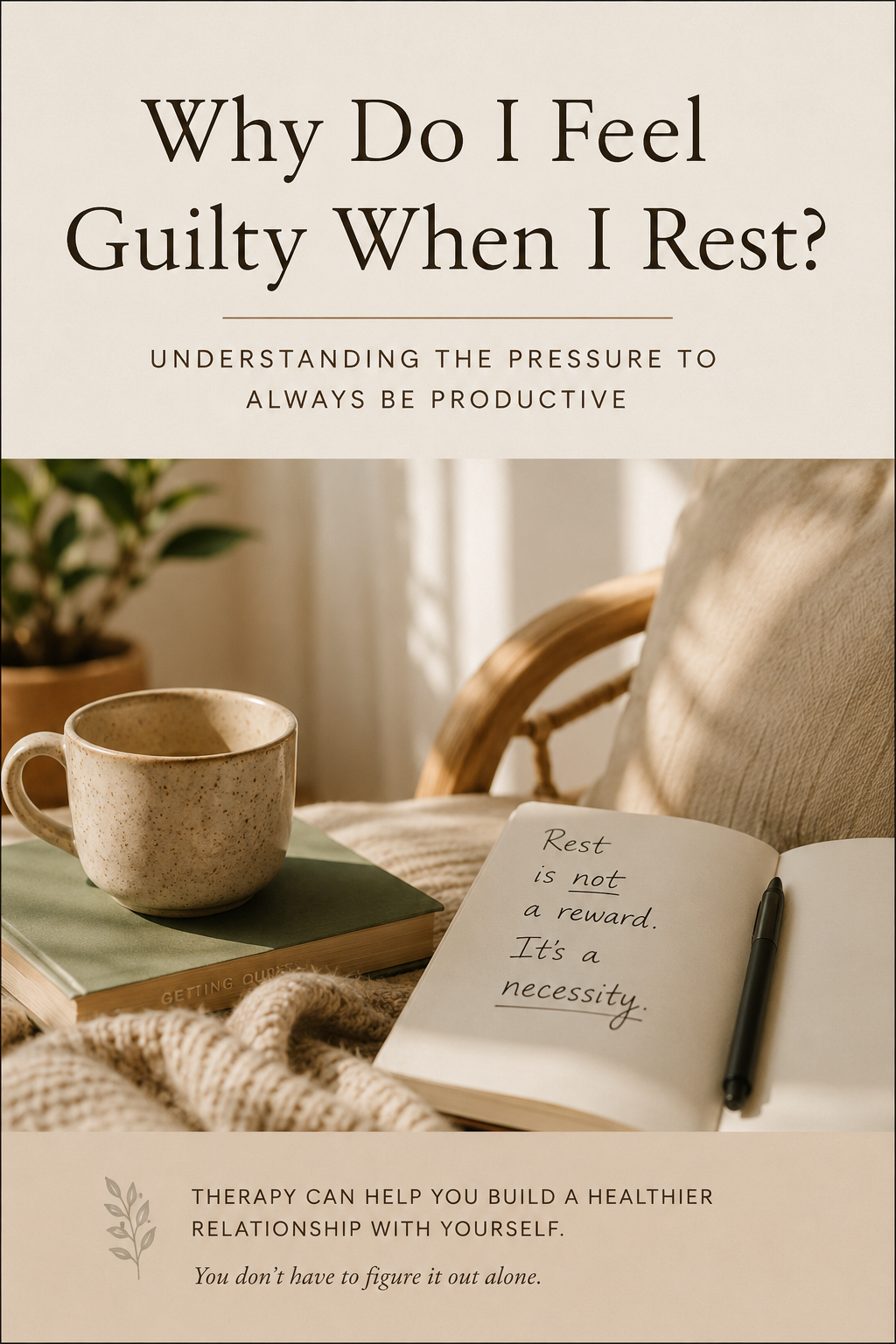
When that happens, rest may begin to feel like a reward instead of a basic human need.
You might tell yourself:
“I can rest after I finish everything.”
The problem is that “everything” rarely gets finished.
There is always another email, task, goal, errand, or responsibility waiting.
So rest keeps getting postponed.
Guilt Can Show Up Even When You Know You Need a Break
One of the frustrating parts of this pattern is that you may logically know you are tired.
You may understand that rest is healthy.
You may even encourage other people to slow down.
But when it is your turn to rest, a different set of rules seems to apply.
Instead of asking, “Do I need rest?” you may find yourself asking:
“Did I do enough to deserve it?”
That question turns rest into something you have to justify.
And even when you finally stop, your body may be resting while your mind is still working.
Why Doing Nothing Can Feel So Uncomfortable
For some people, staying busy also helps keep uncomfortable feelings at a distance.
When life slows down, thoughts and emotions that were easier to ignore may become louder.
You might suddenly notice anxiety, loneliness, self-doubt, or uncertainty.
In that sense, productivity can become a way of staying one step ahead of discomfort.
This does not mean that being productive is bad.
It simply means that sometimes busyness serves more than one purpose.
It helps you accomplish things, but it may also help you avoid being alone with how you feel.
Rest Is Not the Opposite of Being Responsible
Rest and responsibility are not opposites.
Rest is part of being able to function well over time.
You do not have to wait until you are completely exhausted to justify slowing down.
You also do not have to prove that you have worked hard enough first.
One helpful shift is to stop asking:
“Have I earned rest?”
and begin asking:
“What do I need right now?”
That question may feel surprisingly difficult at first.
If you are used to measuring yourself by productivity, listening to your needs can feel unfamiliar or even selfish.
But learning to rest without turning it into another performance goal is often part of building a different relationship with yourself.
A Small Practice to Try
The next time you notice guilt while resting, pause and identify the rule underneath it.
Maybe the rule is:
“I should always be productive.”
“Rest is for people who have finished their work.”
“If I slow down, I’m being lazy.”
Then ask yourself:
Would I apply this same rule to someone I care about?
If not, notice what makes you the exception.
You do not have to immediately convince yourself that the guilt is wrong.
Start by noticing that guilt is present without automatically obeying it.
Rest can feel uncomfortable and still be something you need.
When Guilt Around Rest Becomes a Pattern
If slowing down consistently brings up guilt, anxiety, or harsh self-criticism, it may be connected to deeper patterns around perfectionism, self-worth, or the belief that your value depends on what you accomplish.
Therapy can help you understand where those rules came from and begin developing a relationship with yourself that is not entirely organized around performance.
If this feels familiar, you can learn more about my approach to perfectionism therapy and anxiety and overthinking.
